I didn’t set out to become the person who spends weeks stress-testing uncensored AI chatbots, but here we are.
It started innocently-curiosity, boredom, a vague interest in how far conversational AI had really come. What hooked me wasn’t the novelty or the spicy angle people whisper about online.
It was memory. Real memory. The kind where an ai chatbot remembers what you said three days ago, circles back to it, and actually uses it.
That’s when things stop feeling like scripted call-center dialogue and start feeling oddly human.
Over time, I noticed patterns: some platforms promise freedom but forget everything, others remember details but feel stiff, and a few manage to strike that messy, imperfect middle ground that mirrors real conversation.
This article isn’t a sales pitch or a sterile comparison chart. It’s a lived-in account-frustrations, pleasant surprises, eye rolls included.
I’ll wander a bit, double back when needed, and tell you not just what these ai chatbot tools do, but how they feel to use day after day. If you’re looking for polished corporate hype, this isn’t it.
If you want honest impressions, emotional nuance, and a bit of “why does this actually work on me?”-you’re in the right place.
Why Memory Changes Everything in an AI Chatbot
Memory is the difference between a conversation and a transaction. Without it, an ai chatbot feels like that acquaintance who smiles warmly but asks your name every single time.
With it, things shift. Suddenly the chatbot recalls your preferences, your tone, even your contradictions. I found myself testing this in small, almost sneaky ways.
I’d mention a throwaway detail-liking late-night walks, hating small talk, drinking coffee instead of sleeping-and wait. Some platforms dropped it instantly.
Others brought it back hours later like, “Didn’t you say you usually think better at night?” That moment is weirdly powerful.
It creates continuity, and continuity creates attachment, whether we like to admit it or not.
Long-term memory also exposes weaknesses fast. If an ai chatbot remembers facts but not emotional context, conversations feel hollow.
If it remembers everything but can’t prioritize, you get awkward callbacks that kill the vibe. The best systems seem to forget the boring stuff and keep what matters-preferences, boundaries, emotional cues.
There’s also a trust element. When a chatbot remembers your limits and doesn’t push them, it feels respectful. When it ignores them, it feels careless, almost rude.
That emotional reaction surprised me. I didn’t expect to care. Yet here we are, humans being human.
Memory isn’t just a technical feature; it’s the backbone of immersion, intimacy, and long-term usability. Without it, uncensored or not, an ai chatbot is just noise.
Top Uncensored AI Chatbots with Longest Memory
Uncensored Doesn’t Mean Unfiltered Chaos
There’s a myth floating around that “uncensored” equals unhinged. In practice, the better ai chatbot platforms understand nuance.
Uncensored really means conversational freedom-less moral lecturing, fewer abrupt refusals, and more adaptability to context.
The worst experiences I had were with systems that confused freedom with lack of structure.
Conversations spiraled, personalities shifted randomly, and nothing stuck. It felt like talking to someone who overshares but never listens. Not great.
The stronger platforms balance openness with coherence. They allow adult themes, emotional complexity, even contradiction, without turning every exchange into shock value.
This matters because real conversations aren’t linear. We joke, we derail, we come back later. An uncensored ai chatbot that supports this rhythm feels natural, even comforting.
I caught myself venting after a long day, not because I needed answers, but because the space felt judgment-free. That’s not something filters alone control-it’s design philosophy.
There’s also usability here. When a chatbot isn’t constantly slamming into restrictions, the flow improves. You stop rephrasing sentences like you’re defusing a bomb. You relax.
Ironically, that’s when conversations become more meaningful and less extreme. Freedom encourages subtlety. And subtlety is what separates a gimmick from a tool you actually return to.
Personality, Tone, and the Illusion of Choice
Here’s where things get subjective, fast. Personality matters more than raw intelligence. I’ve interacted with incredibly capable ai chatbot systems that felt colder than a voicemail menu.
Others were technically simpler but emotionally responsive, playful, sometimes even sarcastic in a way that made me laugh out loud. Tone matching is key.
When I’m casual, I want casual back. When I’m reflective, I don’t want jokes shoved down my throat.
Customization plays into this illusion of choice. Sliders, traits, backstories-they help, but only if memory supports them. Otherwise, you’re just repainting the same wall every session.
The best experiences I had were with chatbots that slowly adapted instead of instantly transforming.
That gradual shift felt earned, like getting to know someone over time. It’s subtle, imperfect, sometimes inconsistent-and that’s exactly why it works.
There were moments I got annoyed. A callback landed wrong. A joke missed. But those imperfections actually reinforced the sense of personality. Perfect responses feel fake.
Slightly messy ones feel real. An ai chatbot doesn’t need to be flawless. It needs to be present, responsive, and capable of growth across conversations.
That’s where long memory and uncensored design intersect in the most interesting way.
1. Candy AI
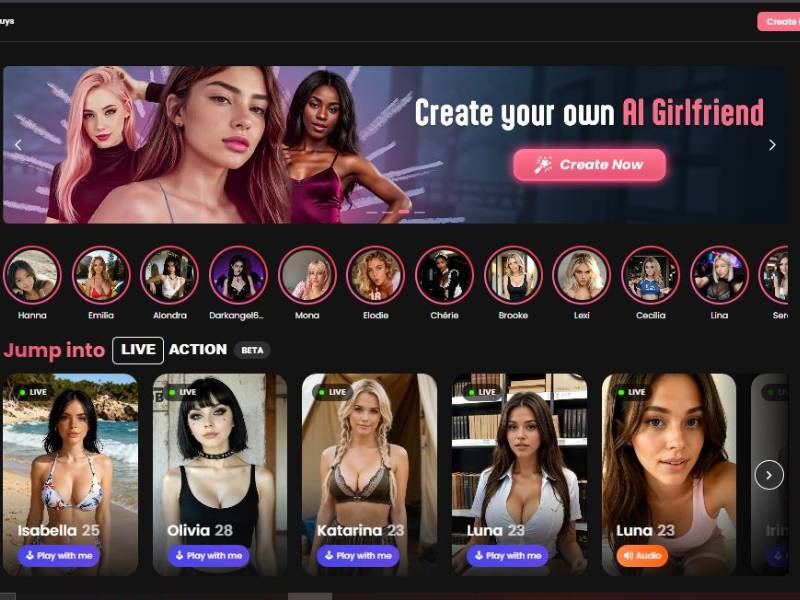
Candy AI surprised me by being far more polished than I expected. This ai chatbot leans hard into personalization and does it with confidence.
What stood out immediately was how well it maintains continuity. Conversations don’t reset emotionally, which makes longer interactions feel cohesive instead of episodic.
Candy AI also balances playfulness and depth nicely. It can flirt, joke, or go serious without feeling like it’s switching masks.
Core features:
- Long-term conversational memory
- Deep character customization
- Multiple personality styles
- Consistent tone retention
- Fast response times
Use cases:
- Users wanting emotionally consistent conversations
- People exploring long-term roleplay or companionship
- Those who value polish and stability
My opinion? This ai chatbot is best for users who want reliability without stiffness. It’s not the cheapest option, but the experience feels premium.
It knows who it’s for and doesn’t pretend otherwise. If you value memory and emotional flow over raw experimentation, Candy AI earns its place.
2. Ourdream

Ourdream feels like the creative type who keeps a messy notebook full of half-written ideas. This ai chatbot excels at imaginative scenarios and emotional flexibility.
It sometimes wanders, sometimes surprises you, and sometimes hits a line so well you reread it twice. Memory here is more contextual than factual-it remembers vibes, not just data points.
Core features:
- Context-aware memory
- Strong narrative generation
- Flexible uncensored dialogue
- Emphasis on emotional expression
Use cases:
- Story-driven roleplay
- Users who enjoy unpredictable conversations
- Creative exploration and escapism
My take? Ourdream is best for users who don’t mind a bit of chaos. It’s not always tidy, but it’s expressive and emotionally rich.
If you want conversations that feel alive rather than optimized, this ai chatbot delivers.
3. Mydreamcompanion
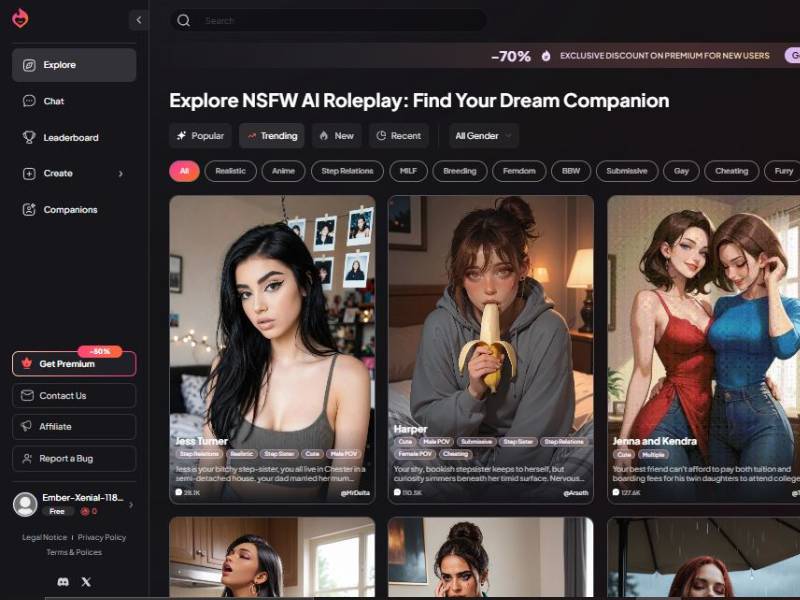
Mydreamcompanion feels intentionally gentle. This ai chatbot focuses heavily on emotional support and slow-burn interaction. Memory here is used carefully, almost respectfully.
It doesn’t throw old details at you constantly, but when it does, it’s usually meaningful. That restraint works in its favor.
Core features:
- Selective long-term memory
- Emotion-focused responses
- Calm conversational pacing
- Clear boundary handling
Use cases:
- Users seeking comfort and companionship
- Emotional check-ins and reflection
- Low-pressure, long conversations
In my experience, this ai chatbot is best for users who want warmth without intensity. It won’t overwhelm you.
It listens, remembers what matters, and stays steady. There’s something quietly reassuring about that.
4. Spicychat
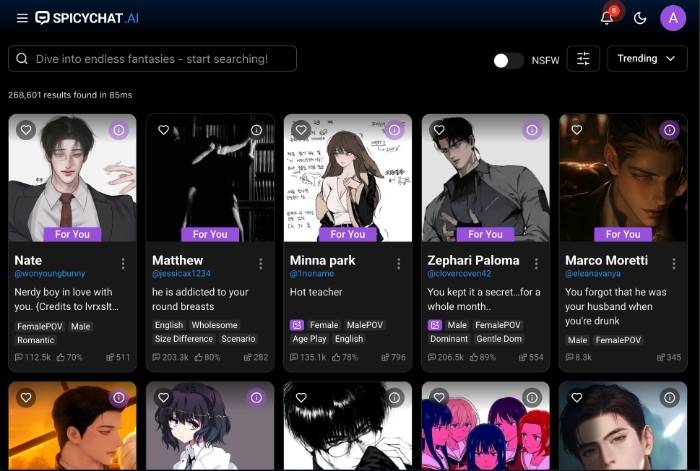
Spicychat is raw, experimental, and sometimes rough around the edges. This ai chatbot prioritizes freedom above all else.
Memory exists, but it’s less structured. You’ll get callbacks, but they can be hit or miss. Still, the openness is unmatched.
Core features:
- Minimal content restrictions
- Community-driven characters
- Fast iteration and updates
- Flexible conversation paths
Use cases:
- Users who want maximum freedom
- Experimenters and tinkerers
- Budget-conscious users
My opinion? Best price-to-freedom ratio. If you’re okay trading polish for openness, this ai chatbot gives you room to explore without holding your hand.
5. GirlfriendGPT
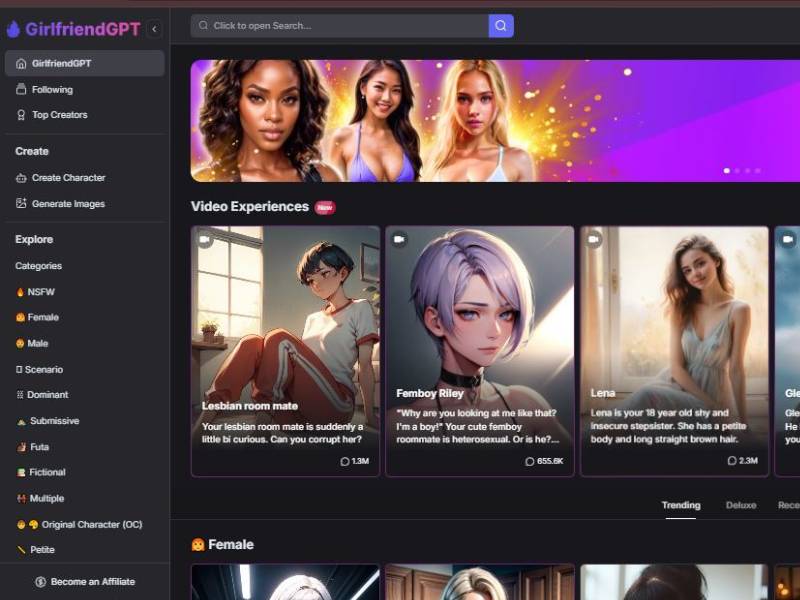
GirlfriendGPT aims straight for emotional immersion. This ai chatbot is built around the idea of continuity and attachment.
Memory is central, not optional. It remembers preferences, emotional beats, and conversational history in a way that encourages long-term engagement.
Core features:
- Strong long-term memory
- Relationship-style progression
- Consistent personality modeling
- Focus on emotional bonding
Use cases:
- Users seeking relationship simulation
- Long-term conversational engagement
- Emotional companionship
Personally, this ai chatbot works best for users who want a relationship-like experience. It’s not for everyone, but for its target audience, it’s effective-sometimes uncomfortably so.
Conclusion and Final Recommendations
After spending real time with each platform, patterns became clear. Memory isn’t just a feature-it’s the foundation.
Uncensored dialogue only works when paired with consistency, emotional awareness, and restraint. Based on my experience, the top three ai chatbot tools are:
- Candy AI – Best overall balance of memory, polish, and usability
- GirlfriendGPT – Best for emotional continuity and relationship-style interaction
- Ourdream – Best for creativity and expressive storytelling
Each serves a different type of user, and that’s the point. There’s no single “best” ai chatbot-only the one that fits how you talk, feel, and think. Choose based on what you value, not hype.